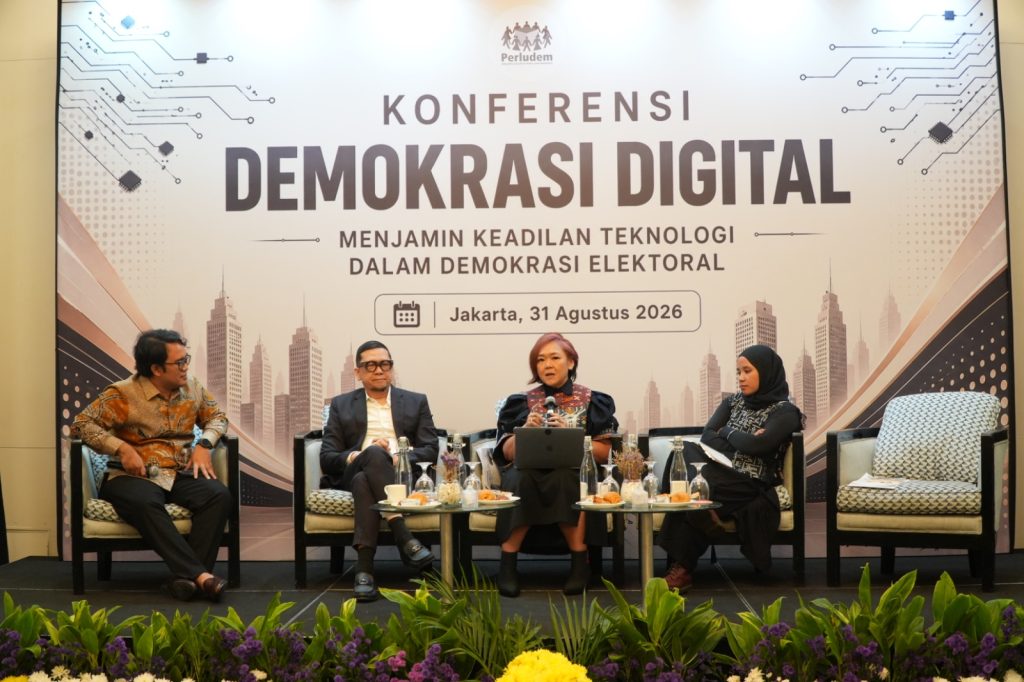
Perludem has launched its latest research on the use of Artificial Intelligence (AI) in election campaigns, while calling for stronger regulations to anticipate the various risks associated with the use of the technology in elections. The research identifies regulatory gaps in governing the use of AI, ranging from content production and distribution and voter outreach to the use of AI to shape candidates’ public images and influence voters.
Perludem Program Manager Kahfi Adlan Hafiz explained that the research was prompted by the growing use of AI in electoral contests, which has yet to be accompanied by a specific legal framework. AI is now being used as an operational campaign tool, a means of reaching voters, and an instrument for deception.
In practice, AI can be used to monitor social media sentiment, produce avatars and chatbots, and generate content designed to shape candidates’ public images. At the same time, the use of political deepfakes, image laundering, and algorithm-based message personalization may prevent voters from understanding how political messages are produced and why they are being targeted at them.
“AI is now being used for everything from content creation and the dissemination of disinformation to voter profiling. However, there are still no specific rules or guidelines governing the use of AI in the context of election campaigns,” Kahfi said.
Perludem Researcher Annisa Alfath further explained that there are three major regulatory gaps in governing AI in elections: transparency requirements, the prohibition or restriction of synthetic content, and regulation of AI systems and digital platforms. She noted that existing regulations are still predominantly based on a hard law approach, including the Electronic Information and Transactions Law (ITE Law), the Personal Data Protection Law (PDP Law), Constitutional Court rulings, KPU Regulations (PKPU), and Bawaslu Regulations (Perbawaslu). However, these regulations do not specifically address the use of AI in elections.
To address these challenges, Perludem also examined how a number of countries regulate the use of AI in elections. Practices across countries demonstrate a range of regulatory approaches, from voluntary soft lawand legally binding hard law to hybrid law, which combines the two. These regulations are also implemented through different models, either through multiple separate regulations or under a single overarching legal framework.
Based on these findings, Perludem has proposed three key measures: mandatory disclosure of AI use (disclosure requirements), the prohibition and restriction of synthetic content, and stronger accountability for AI developers and digital platforms.
Perludem has also developed a roadmap for regulating AI in elections. In 2026–2027, a legal framework governing the use of AI in election campaigns is needed. The next stages include regulation through PKPU in 2027–2028, the implementation of a regulatory sandbox in 2028, the registration of AI tools used in campaigns in 2028–2029, and post-election compliance evaluation and audits in 2029–2030.
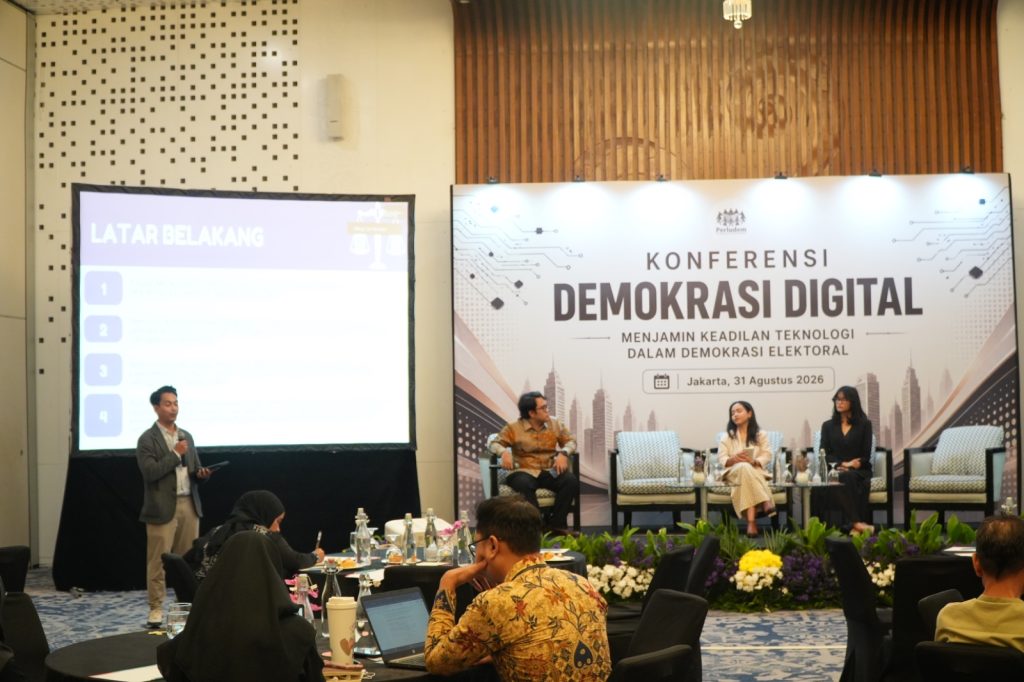
Deputy Chair of the House of Representatives’ Legislative Body (Baleg DPR RI) Ahmad Doli Kurnia welcomed Perludem’s research, saying it could serve as an initial foundation for responding to the development of AI in election administration. He said research of this kind is important to encourage policymakers to anticipate technological developments before they move too quickly for regulations to keep pace.
Doli said the ongoing revision of the Election Law should be used as an opportunity to begin incorporating provisions on AI in election campaigns. Without clear regulations, he argued, technological developments could create grey areas in political and electoral practices. He also called for more comprehensive AI regulations that can accommodate the use of AI across different sectors, not only in elections.
“We need to think seriously about technological developments. Otherwise, this could become dangerous. That is why we need hard law to regulate technological developments in elections, particularly AI,” Doli said.
Meanwhile, Southeast Asia Freedom of Expression Network (SAFEnet) Executive Director Nenden Sekar Arum emphasized the importance of positioning AI regulation as part of broader efforts to build an electoral ecosystem with integrity. She said regulation should not simply be aimed at restricting the use of technology, but also at ensuring that voters have access to reliable information and are not easily influenced by AI-based manipulation.
Nenden also called on civil society organizations to strengthen campaigns around digital campaign accountability. She said oversight of technology use in election campaigns needs to involve multiple stakeholders to ensure that AI is not used to deceive or manipulate the public without a clear accountability framework.
For the full findings, analysis, and policy recommendations from Perludem on regulating AI in election campaigns, the research report “Bridging the Regulatory Gaps in Election Campaigns in the Era of Artificial Intelligence” is available at:
Ajid Fuad Muzaki
Researcher at the Association for Elections and Democracy (Perludem)