
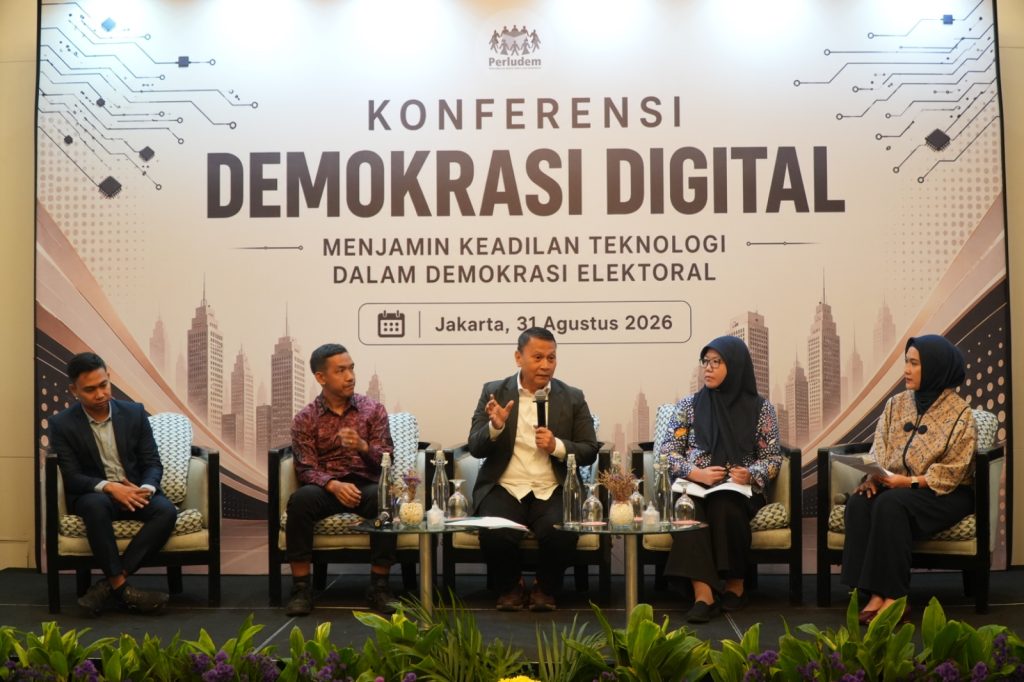
Digital democracy cannot be built simply by adding more applications or introducing technology at every stage of the electoral process. More fundamentally, it requires the development of digital public infrastructure that is open, inclusive, secure, and accessible to the public, enabling citizens to access and monitor democratic processes.
This idea was among the key issues discussed at the Digital Democracy Conference organized by Perludem in Jakarta on Monday (31 August). At the forum, Perludem presented research highlighting the importance of developing digital public infrastructure as a foundation for democratic and electoral governance in Indonesia.
In his opening remarks, Perludem Executive Director Heroik M. Pratama explained that the changing digital landscape is creating new challenges for democracy. The rapid development of artificial intelligence (AI) is enabling content to be produced and distributed on a much larger scale. In political and electoral contexts, this could accelerate the spread of disinformation while also creating new ethical and governance challenges. He emphasized that digitalization must be approached as a means of strengthening democracy, rather than merely pursuing technological efficiency.
“There are three basic principles that need to be considered. First, digital technology must be inclusive. Second, digital systems must be free from bias. And finally, digitalization must strengthen public trust,” Heroik said.
He noted that the widespread use of technology and AI-generated content could potentially push democracy into a post-truth era. Therefore, efforts to develop digital infrastructure must go hand in hand with measures to safeguard democratic integrity.
Also speaking at the forum, Deputy Minister of Home Affairs Bima Arya welcomed Perludem’s research, particularly its call to develop digital public infrastructure as an important component of strengthening democratic governance in Indonesia. Technology, he said, should be used to address challenges in elections rather than create new ones.
“Technology should provide solutions to electoral problems. We must not create electoral problems simply for the sake of using technology. Therefore, the success of electoral digitalization cannot be measured solely by technological efficiency and accuracy; it must also ensure that integrity and democracy are protected,” Bima Arya said.
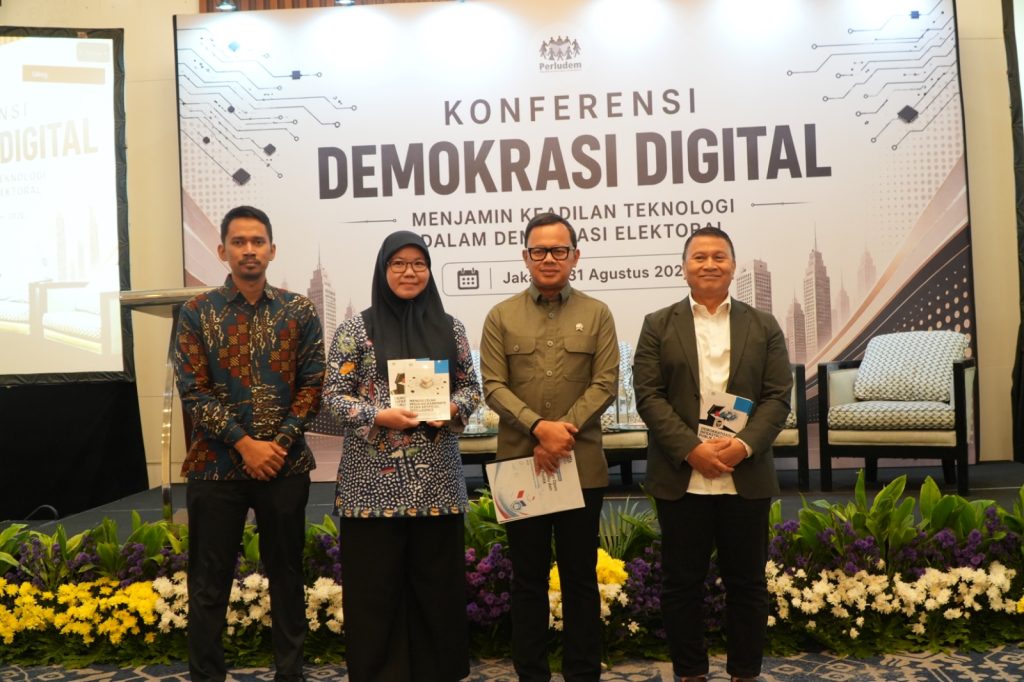
Through its research, Perludem is calling for a shift in the way digitalization is understood and developed within democracy. Technological development should not be limited to creating new applications. Instead, it should be developed as open digital public infrastructure that delivers meaningful benefits to the public.
Perludem’s research highlights the importance of strengthening electoral data transparency while ensuring that citizens’ personal data remains protected. Transparency should also extend to political parties, particularly regarding information on their programs, leadership and organizational structures, as well as the sources and use of party finances.
Perludem also calls for transparency of electoral and political party data to be established as an institutional obligation. Digital infrastructure should be built based on standards that enable data to be interoperable, easily accessible and usable, while continuing to protect privacy. It should also be developed sustainably and in collaboration with the public.
The full research report is available to read and download here:
Download Perludem Research – Digital Public Infrastructure for Democracy
Ajid Fuad Muzaki
Researcher at the Association for Elections and Democracy (Perludem)