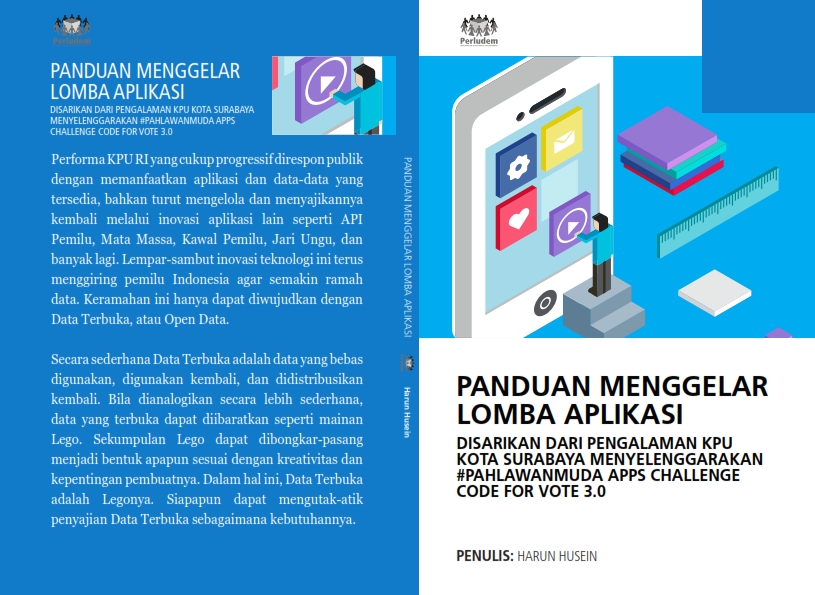
The increasingly progressive performance of Indonesia’s General Elections Commission (KPU) has been met with positive public responses through the utilization of available applications and electoral data. Members of the public have not only made use of these resources but have also processed and re-presented them through innovative platforms such as API Pemilu, Mata Massa, Kawal Pemilu, Jari Ungu, and many others. This dynamic exchange of technological innovation has continued to drive Indonesian elections toward becoming more data-friendly. Such an environment can only be achieved through the implementation of Open Data.
In simple terms, Open Data refers to data that can be freely used, reused, and redistributed by anyone. To illustrate this concept more simply, Open Data can be compared to Lego bricks. A collection of Lego pieces can be assembled and reassembled into countless forms depending on the creativity and objectives of the builder. In this analogy, Open Data serves as the Lego bricks. Anyone can modify, process, and present Open Data according to their own needs and purposes.