
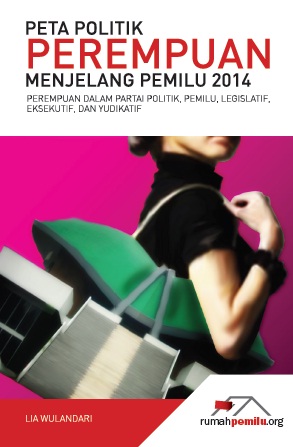
Women in Political Parties, Elections, the Legislature, the Executive, and the Judiciary
Author: Lia Wulandari, Perludem, 2013
After being implemented in two electoral cycles, the affirmative action policy requiring a 30 percent quota for womenbegan to show tangible results. While the 2004 Election resulted in women holding 11 percent of seats in the House of Representatives (DPR), 22 percent in the Regional Representative Council (DPD), 12 percent in provincial legislatures, and 6 percent in regency and municipal legislatures, the 2009 Election increased women’s representation to 18 percent in the DPR, 27 percent in the DPD, 16 percent in provincial legislatures, and 12 percent in regency and municipal legislatures.
However, this increase also brought new challenges. The results of the 2009 Election showed that approximately 25 percent of elected women legislators were public figures or celebrities, while 41 percent came from political dynasties. The prominence of these backgrounds would not necessarily be problematic if these representatives were able to effectively carry out their legislative responsibilities. In practice, however, the results were often less encouraging. It is at this point that the implementation of affirmative action policies requires careful evaluation.
This publication was originally available for purchase at a price of IDR 35,000. Interested readers could contact Perludem through [email protected] or by telephone at +62 21 8300004 (contact persons: Ibrohim/Santo).