Yogyakarta — Perkumpulan untuk Pemilu dan Demokrasi (Perludem), together with Nalar Institute, held a workshop session titled “AI and the Ballot Box: Designing a Legal Framework for the Use of Artificial Intelligence in the 2029 Election Campaign” as part of the Jagongan Hak Digital (JHD) event series initiated by Safenet and Combine. The session was held at Lodji Paris, Yogyakarta, on Sunday (August 2, 2026).
Perludem Executive Director Heroik M. Pratama opened the session by explaining the urgency of the research currently being conducted by Perludem and Nalar Institute on regulating the use of AI in election campaigns. He highlighted Constitutional Court Decision No. 166/PUU-XXI/2023, which addresses the manipulation of election participants’ self-images using AI, but argued that the ruling does not adequately address the broader range of issues surrounding AI use in elections.
Perludem Program Manager Kahfi Adlan Hafiz explained how AI was used during the 2024 Election, ranging from campaign operations such as the creation of AI-generated avatars, voter mapping and personalization, to microtargeting as part of voter outreach efforts. He also highlighted the misuse of AI for fraudulent purposes, including deepfakes, image laundering, and other forms of synthetic content. According to Kahfi, these uses of AI pose democratic risks, including information distortion, polarization, inequality, and political violence.
The session also featured a presentation evaluating the existing legal framework by Perludem researcher Annisa Alfath, as well as a comparative overview of AI regulatory practices in various countries by Nalar Institute researcher Dhivana Anarchia Ria Lay, who mapped the characteristics of both soft-law and hard-law approaches.
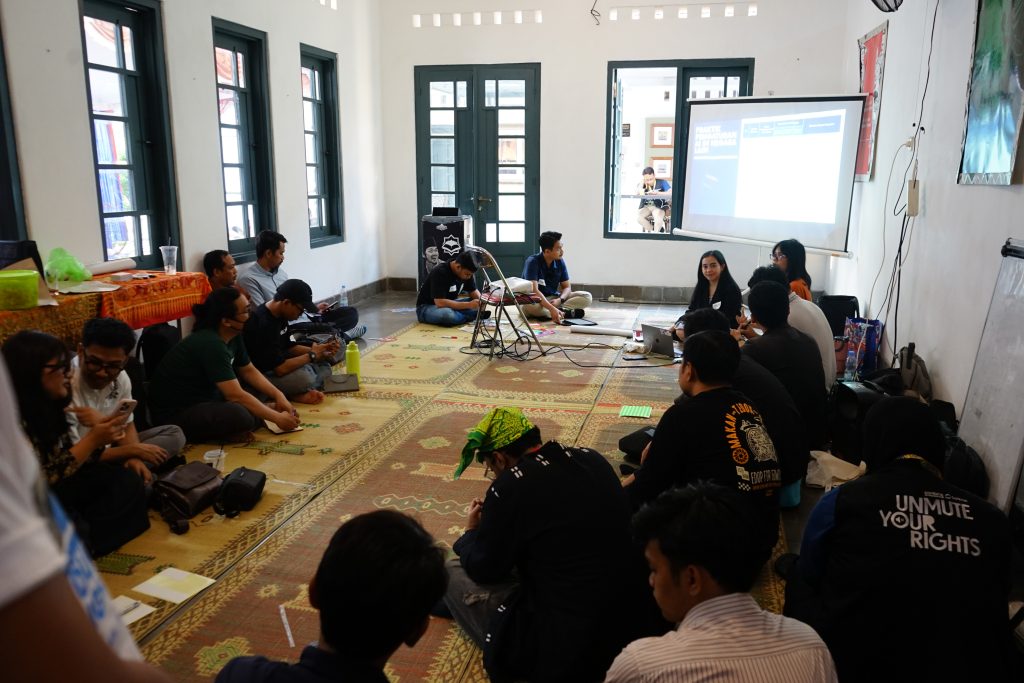
During the question-and-answer session, Mafindo representative Septiaji Eko Nugroho emphasized the importance of forward-looking regulation that does not merely respond to problems that have already emerged, particularly as AI development has entered a more complex agentic AI phase. He also called for cross-platform standardization of watermarks.
Meanwhile, Adi Marsiela of the Alliance of Independent Journalists (AJI) questioned the direction of advocacy if the revision of the Election Law continues to face delays. In response, Kahfi acknowledged that the current process of discussing the Election Law tends to be highly centralized. He pointed to civil society advocacy channels—including judicial review before the Constitutional Court and efforts to improve technical regulations such as KPU Regulations (PKPU) and Bawaslu Regulations (Perbawaslu)—as potential avenues for implementing the recommendations that have been developed.
The discussion continued through two group workshop sessions, which explored participants’ experiences as digital citizens exposed to algorithmic campaigning and developed proposed regulatory frameworks covering transparency obligations, restrictions on synthetic content, and regulations governing AI systems and social media platforms.
The outcomes of the workshop will serve as input for Perludem’s research on good practices in regulating AI in elections, with the hope of contributing to improvements in the future revision of the Election Law.
ANNISA ALFATH
Researcher, Perkumpulan untuk Pemilu dan Demokrasi (Perludem)