
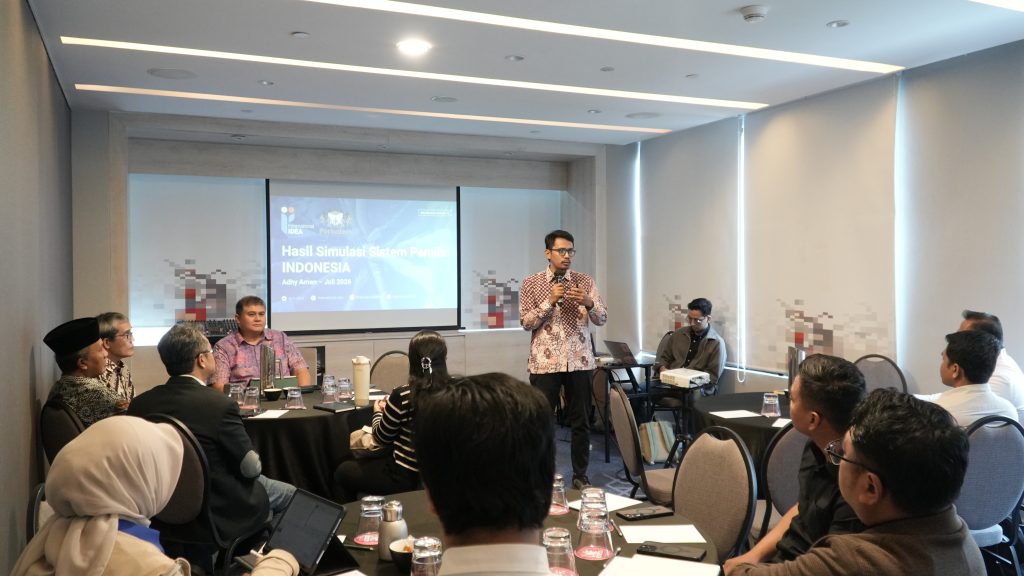
Discussion and presentation on an election system simulation with political parties, Jakarta (July 22)
Association for Elections and Democracy (Perludem), in collaboration with International IDEA, held a discussion and presentation of the results of a Mixed-Member Proportional (MMP) electoral system simulation with representatives of political parties in Jakarta on 22 July. The meeting served as a platform for dialogue between the simulation team and political party representatives to discuss the design and findings of the simulation as one of the alternative options for electoral system reform in Indonesia. The forum also gathered initial perspectives from political parties regarding the opportunities and challenges of implementing such a system.
Perludem Executive Director, Heroik M. Pratama, explained that the MMP simulation forms part of a broader effort to promote evidence-based discussions on electoral system reform. The simulation uses population data and the results of Indonesia’s 2024 General Election to illustrate how parliamentary seats might be distributed if Indonesia were to adopt a mixed electoral system.
Adhy Aman, Senior Programme Manager at International IDEA, emphasized that every electoral system has its own strengths and limitations, meaning that no single system can be considered universally ideal for all countries. Therefore, the design of an electoral system should be tailored to the specific needs and political context of each country.
The simulation was developed using data from the 2020 Population Census and the results of the 2024 General Election. It also took into account various factors, including seat reallocation, constituency delimitation, vote-to-seat conversion mechanisms, and the testing of several parliamentary threshold scenarios. The findings are expected to contribute to discussions on evaluating alternative electoral system designs for Indonesia.
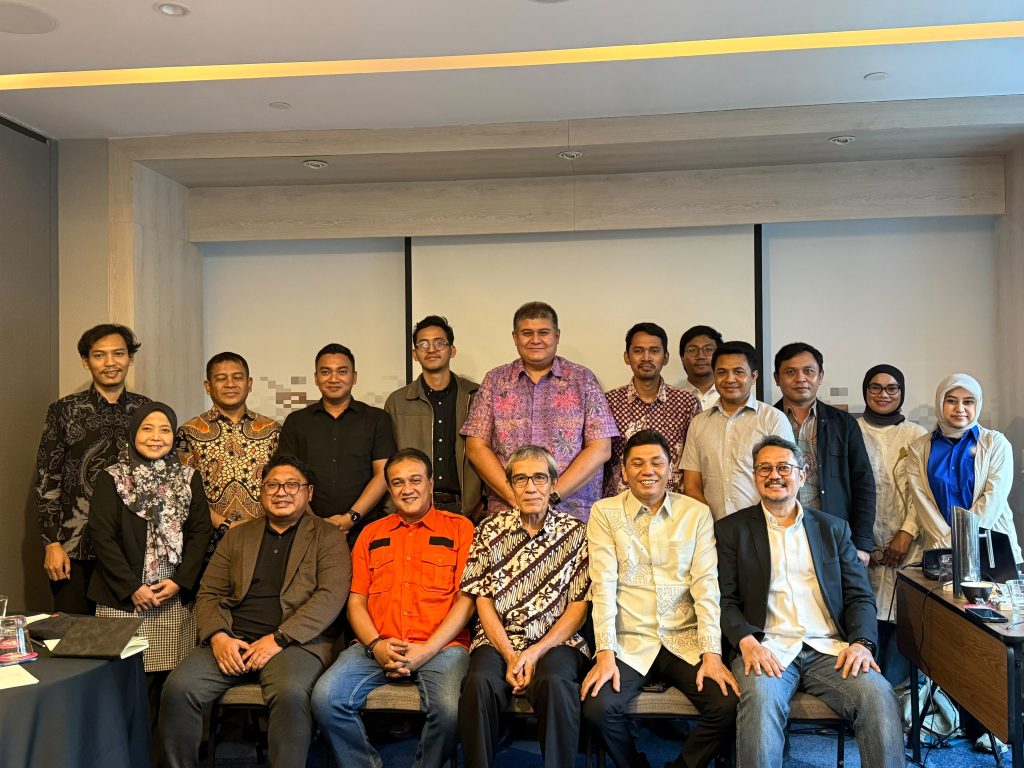
Overall, representatives of the political parties welcomed the simulation and the academic study conducted by Perludem and International IDEA, noting that it enriches ongoing discussions on electoral system reform. Participants also provided a range of comments and recommendations, particularly concerning constituency design and seat allocation, the appropriate parliamentary threshold, the potential for overhang seats, and the impact of the MMP system on electoral proportionality, inter-party competition, and political representation.
Adhy Aman reiterated that the simulation is not intended to advocate for the adoption of any particular electoral system. Rather, the study was designed to present a range of policy options and their potential consequences, enabling a more comprehensive and evidence-based discussion on electoral system reform.
Closing the event, Hadar Nafis Gumay stressed the importance of continuing discussions on electoral system reform as part of broader efforts to strengthen the quality of Indonesia’s democracy. According to him, not all electoral challenges can be resolved solely through changes to the electoral system. Nevertheless, improving the design of the electoral system remains an important component in achieving elections that are more proportional, representative, and responsive to the needs of Indonesia’s democracy.
Ajid Fuad Muzaki
Researcher Association for Elections and Democracy (Perludem)