As the concluding phase of the Democracy Academy series, The Association for Elections and Democracy (Perludem) held a political education training for teachers on 8–9 July 2026. The programme encouraged educators to integrate democratic values, digital literacy, and critical thinking into classroom learning while collaborating to develop teaching materials that are contextual, practical, and responsive to students’ needs.
Jakarta – Concluding the Democracy Academy series for high school and university students, the Association for Elections and Democracy (Perludem) held a political education training for school teachers in Jakarta on 8–9 July 2026. This programme marked the third phase of the Democracy Academy, focusing on developing democratic learning that connects with everyday teaching and learning practices in schools.
The training brought together 20 teachers with diverse subject backgrounds and teaching experiences. Teachers were not positioned merely as recipients of the training, but as Perludem’s partners in identifying classroom needs, testing the relevance of the learning materials, and developing practical ways to translate democratic values into students’ learning experiences.
On the first day, participants explored four core themes of the Democracy Academy: an introduction to democracy, democratic actors, democracy in the digital sphere, and critical thinking skills. These themes were not discussed only as concepts. Participants reflected on their teaching experiences, the state of Indonesian democracy, and the challenges students face when navigating information and digital technology.
The discussion then turned to a practical question: how can Perludem’s democracy learning materials serve as supporting resources in the classroom without adding to the curriculum burden? Facilitators emphasised that the Democracy Academy modules are not intended to replace the existing curriculum. Rather, they can enrich teachers’ Learning Objectives, Learning Objective Sequences, and teaching modules. Participants then worked in groups to identify learning objectives that were relevant to their subjects and grade levels.
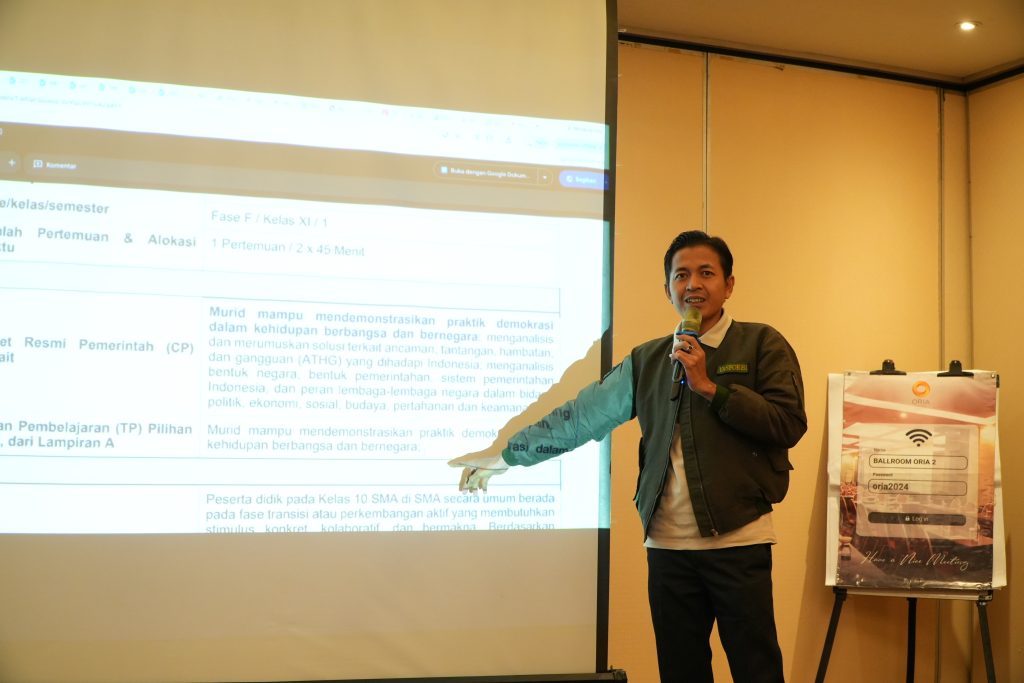
The second day became a space for practice and collaboration. Each teacher developed an independent lesson plan for one learning objective, designed for one to three classroom sessions and incorporating at least two topics from the Democracy Academy modules as supporting reading materials or learning activities. The plans were presented and reviewed by facilitators and fellow participants.
The evaluation showed that participants generally assessed the substance of the materials, their relevance to existing learning plans, and the facilitators’ delivery positively. Participants also highlighted the importance of using examples closer to everyday school life, adding current case studies, and keeping discussions focused. These inputs will form an important part of the continued development of the Democracy Academy learning materials.
As a follow-up, Perludem is opening opportunities for participants to become collaborating developers of Learning Objectives, Learning Objective Sequences, and teaching modules that integrate democratic content. Five selected teachers will receive technical assistance and an honorarium to develop these learning tools. Their work is expected not only to provide examples of good democratic learning practices in schools, but also to strengthen Perludem’s materials as practical resources that teachers can use in the classroom.
Through the teacher cohort, the Democracy Academy is intended to extend beyond a two-day training. It serves as a space for collaboration between Perludem and educators to bring democracy education closer to students through learning materials that are contextual, critical, and responsive to schools’ needs.
M. Iqbal Kholidin
Researcher at The Association for Elections and Democracy (Perludem)