
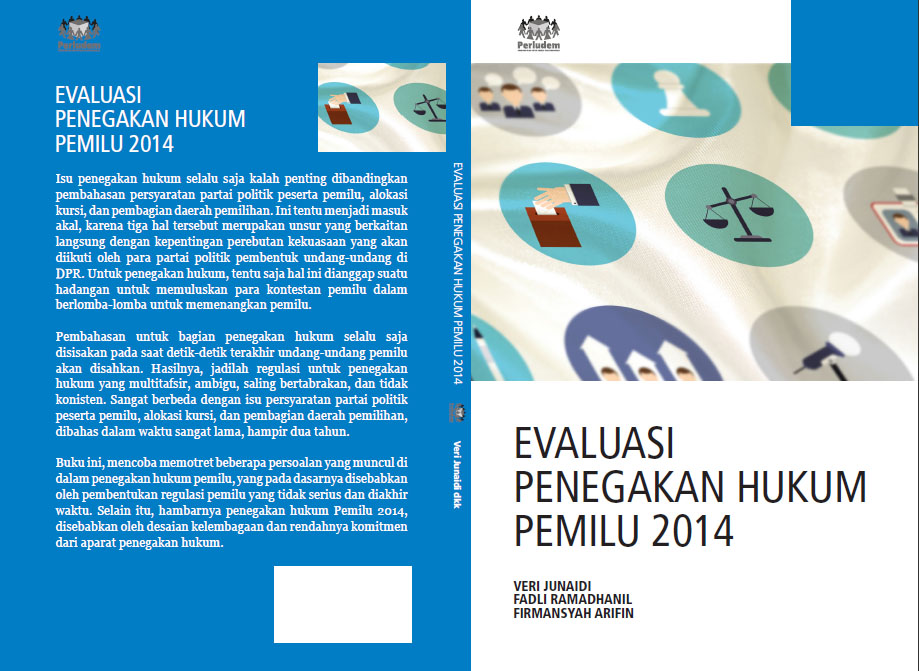
Issues related to electoral law enforcement have consistently received less attention than discussions on political party eligibility requirements, seat allocation, and electoral districting. This is understandable, as these three issues are directly connected to the competition for political power involving the political parties represented in the legislature and responsible for drafting electoral laws. By contrast, law enforcement is often viewed as an obstacle that may hinder electoral contestants in their efforts to secure victory.
As a result, discussions on electoral law enforcement are frequently postponed until the final stages of the legislative process. The consequence is the creation of legal provisions that are open to multiple interpretations, ambiguous, inconsistent, and sometimes contradictory. This stands in sharp contrast to issues such as political party eligibility, seat allocation, and electoral districting, which are often debated extensively over a period of nearly two years.
This book seeks to examine a number of problems that emerged in the enforcement of electoral law, many of which stem from the lack of serious attention given to the formulation of electoral regulations and the tendency to address them only at the last moment. Furthermore, the limited effectiveness of electoral law enforcement during the 2014 General Election can also be attributed to weaknesses in institutional design and the insufficient commitment of law enforcement agencies responsible for implementing electoral laws.